Jan16
Author Archives: Dillon

Jan4
Zoning Gives Me Sass
Sammit and I may or may not be looking at a farm nearby and I’ve spent a significant amount of time reading the thrilling zoning conditions of the land. I came across this beauty:
Traditional family farms are no longer economically viable in the urban environment created by population growth in Oakland County and the Township. Farming, for the purpose of wholesale distribution, cannot survive in the Township because of the direct and indirect additional costs of farming in an urban area. Land and labor costs far exceed those of competing farms in more rural areas. Farm equipment and material suppliers are no longer located within the Township or the area. Farming for direct retail sale of produce is also non-economic. The produce departments of large supermarkets and grocery stores are able to supply fruit and vegetables at our near the cost of a farm market and often supply such goods at below cost as a means of encouraging store traffic. Direct retail sale of farm produce is limited to a few weeks a year and is extremely dependent upon weather conditions for success. Notwithstanding these concerns and difficulties, the Township wishes to encourage the use of land for farm purposes. Farming and farm land provide valuable open space within the Township for the enjoyment of all residents while still utilizing the land productively. Farms help maintain the connection to the Township’s rural past. The direct sale of produce from Township farms helps promote a sense of self-sufficiency and community often missing in an urban environment. Promotion and preservation of farms and farm land is of great benefit to the Township and its residents.
My thoughts:
- The 10 acres of horse pasture that we’re looking at buying which backs to a wooded state recreation area does not feel like the urban environment the zoning describes.
- The comparison of land and labor costs between rural and urban areas as well as their economic viability should not be a generalized zoning statement and is dependent on many factors.
- “Equipment and suppliers are no longer located in the township?” But they are located just outside of the township and at the very furthest in Ann Arbor and Detroit (*cough* urban areas) which is still fewer miles than many of those wildly successful rural farmers have to drive.
- “Farming for direct retail sale of produce is also non-economic.” Well “non-economic” seems a bit harsh but I’ll make sure to send that right over to all the CSA managers and overnight it to the Michigan Farmer’s Markets, which have over tripled in number from 90 to 280 in the last decade. They need to know that their success, increasing demand, and keeping Michigan money in Michigan by buying directly and locally is not working for them.
- “Large supermarkets and grocery stores are able to supply fruit and vegetables at [or] near the cost of a farm market” is not true in my experience – I can get fresher produce from the Eastern Market for FAR less than I can get it in most grocery stores. And barring spoiled food, I have never experienced a grocery store selling produce below cost.
- After 2/3 of the paragraph indicating how unwise it is to even think about farming, the remaining 1/3 is slightly redeeming and very confusing given the former statements.
- I became excited when I finished the paragraph and realized that the township might support a small sustainable farm until they listed one of the requirements as needing a minimum of 30 contiguous acres, of which we would only have 10.
Jan3
13 Resolutions…
…To Change the Food System in 2013
Excellent list from Danielle Nierenberg. Everyone can do at least one thing on the list to ensure long-term changes locally and globally in terms of food accessibility and health.
Those Resolutions are:
1. Growing the Cities
2. Creating Better Access
3. Eaters Demanding Healthier Food
4. Cooking More
5. Creating Conviviality
6. Focus on Vegetables
7. Preventing Waste
8. Engaging Youth
9. Protecting Workers
10. Acknowledging the Importance of Farmers
11. Recognizing the Role of Governments
12. Changing the Metrics
13. Fixing the Broken Food System
You can check out my source here.
Dec31
2012 – National Young Farmer’s Conference
Wow! This wonderful conference sold out in 36 hours! When I sat down for breakfast on the first day I felt a little out of place, not very confident, and guilty about taking up space that could have gone to someone on the wait list. By the end of the second and final day I knew I was exactly where I was supposed to be.
The Host
The conference was hosted by the Stone Barns Center in Pocantico Hills, New York. This place is amazing and très agrarian chic. I told Sammit that I want my ashes spread there when I die. I encourage you to explore their website, but be warned that it simply does not do it justice. Here is their mission:
The mission of Stone Barns Center is to create a healthy and sustainable food system that benefits us all. Located 25 miles north of Manhattan, Stone Barns Center for Food and Agriculture is a 501 (c) 3 nonprofit institution. We operate an 80-acre farm and work to:
Increase public awareness of healthy, seasonal and sustainable food.
Train farmers in resilient, restorative farming techniques.
Educate children about the sources of their food, and prepare them to steward the land that provides it.
The People
I may be biased, but I think that Farming conferences have a) the best food (which I will get to later) and b) the best people of all conferences. I only met a handful the 150+ people present but each any every one of them was charming and wandering down a particular path toward sustainable agricultural community. We were all incredibly different and yet I had never been in a room where I had so much in common with everyone. I met several people from Michigan: A couple that just started farming in Midland, a campus farm manager from Andrews University, the agricultural manager of the Grand Rapids’ YMCA, and a few U of M grads who’ve worked on farms. I met farmer’s from Long Island and California. I met veg farmers, ranchers, land owners, CSA managers, homesteaders, and cheese makers. I met young farmers and old farmers and couple farmers and platonic partner farmers, radical farmers, traditional farmers, and so on and so forth. Here are some highlights of my favorites:
- Tom, a farmer with a wicked ‘stache who slept in a sleeping bag in the field outside the center to save money who told stories of getting strip-searched in Canada because of his corn seeds.
- Eliza, a farmer and soon-to-be sheep rancher who fell in love with local and sustainable food systems at 15 when she did a science project.
- Angie & Joe, small farmers who grow on their own land and provide “foodie” baskets to their share holders. (This couple is a-friggin-dorable and living my dream life a few years ahead of me).
In addition to the great folks that traveled near and far to be at the conference, there were the wonderful people who work at Stone Barns – all the apprentice farmers, the restaurant staff, the conference organizers, and the board president, Fred Kirschenmann, co-author of “Cultivating an Ecological Conscience: Essays from a Farmer Philosopher.
The Workshops
I wanted to attend every workshop offered. Alas, I cannot yet be in two places at once; I will have to wait to level up before I have that skill. Instead I went to the workshops I could and picked the brains of those who attended other workshops.
Day One:
- Finding Your Farm: From Basics to Action – the basics of land access facilitated by Kathy Ruhf from Land For Good. I went into this workshop thinking that owning my own land was the only option I could settle on for farming and I left it knowing so much more about options for land leases.
- Cooking for Farm Crews – Tamar Adler (who wrote An Everlasting Meal!) walked us through cooking a week’s worth of lunches for farm crews using just a few ingredients. She spoke beautifully about the dignity of serving farm and restaurant workers meals that have value, but are still cost effective.
- Pollination Strategies of Common Food Plants – I learned so much about bees, beetles, moths, butterflies, and all the things they pollinate. My favorite quote, “Honeybees are the spoiled sluts of the pollinating world.” Rebecca McMackin from Brooklyn Bridge Park and Mantis Plant Works did a pretty good job of condensing millions of years of evolution into an hour and a half – tough work.
- Carpentry – Gregg Twehues, the groundskeeper at Stone Barns, lead a workshop where he walked us through the tools/materials uses for basic carpentry. We also learned how to build a wall and also how to put in a door or window into that wall.
Day Two:
- Growing New Farmers in the City – a slightly mis-titled workshop that basically talked about the history of East New York Farms, an urban farm in Brooklyn. I thought it was going to be more about techniques for urban farmers and most of the information wasn’t really applicable to me. I did, however, learn about some of the challenges of growing in pure compost but I’m hopeful because my compost is a combination of food scraps and horse manure rather than the pine and leaf compost that comes from most cities.
- Innovative Approaches to the CSA Model – great stories and ideas from Sara Worden (CSA Manager of Full Plate Farm collective) and Suzy Konecky (Cricket Creek Farm) about ways to run CSAs. Including this amazing idea of members taking what they need each week instead of being given pre-packed boxes (with some limitations). They also gave great marketing and book-keeping advice.
- Tools for the Next Generation of Farmers & Farm Advocates – Probably the most important workshop I attended and how fitting that it was the last one! Lindsey Lusher Shute of the National Young Farmers Coalition and Alicia Harvie of Farm Aid facilitated a truly fantastic hour and a half where I filled pages upon pages of my notebook with resources.
The Food
Oh my god. The food. For breakfast I ate ripe pears, hard-boiled eggs with orange yolks, and chocolate laced croissants that were so delicious and french I could actually feel my teeth bite through each of the hundreds of flaky pastry layers. I paired breakfast with the most delicious coffee I’ve ever had. For lunch they served quiche with a baby potato crust, incredible soup (a cauliflower one day and squash the next), and fresh baguettes. The one night they served dinner I had fresh greens tossed in a light dressing, moist meatloaf, literally to most amazing mashed sweet potatoes I’ve ever eaten, and a great pear tartlet for dessert. I wanted to eat at Blue Hill, the restaurant at Stone Barns, but it was far beyond our budget. To give you a slight idea, we’ll be putting away $20/month with the hopes of eating there next year.
Coming up next…
After the conference, our time in NYC!
Dec16
Quick Update from NY
I have spotty internet (because the hotel charges 10 a day for it!) while I’m here in NY but I wanted to give you a taste of what I’m doing before I formulate beautiful, articulate posts about it (ha).
The Young Farmer’s Conference was more than I ever could have hoped for and I cannot wait (obviously a lie) to tell you all about it. Check out a picture of the Hogwarts-esque main hall where we ate our meals:
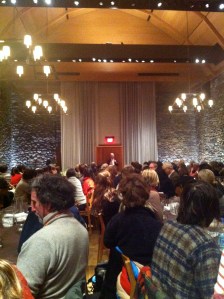
Since the conference has been over I’ve been exploring Long Island, Manhattan, and now some of the mainland. I’ll be home on Wednesday and try to get some pictures and content up and running.
Dec8
New Resource Page: Social Justice!

I’ve updated the Resources section to include a page on Social Justice. There are two fantastic resources there on anti-racism and privilege. I really encourage you to check them out; they are accessible and informative. You’ll find something there whether you are an expert in social justice or have never heard that combination of words before.
As with all the resource pages, I will update them when I find appropriate websites, videos, books, etc. If you have any resources that you love and want me to add them, I’d be happy to take a look!
Dec4
UVM Breakthrough Leaders Program
This past summer I attended the University of Vermont’s Breakthrough Leaders Program for Sustainable Food Systems (a mouthful, figuratively and while there, literally). Their 2013 program has just opened up applications and you can check it out HERE. I would be happy to answer any questions that you might have about it (and you can check out a few testimonials by linking through their side bar).
I had an amazing time while I was there. In fact, this website is up and running right now because of the confidence and education that UVM’s program helped me develop. In addition to this site, I’ve focused the rest of my Master’s in Social Work program on studying community food systems, food and social justice, and food policy. I worked with some fantastic people from all across the US, Canada, and Mexico and learned about an amazing part of the country that is leading the way in changing our food system.
My old blog has detailed posts on my days at UVM and I won’t make you sit through all of that again, but below are some nostalgic pictures. I’ll be returning again this summer for their alumni event and to attend their Food [R]evolution conference. I hope to see some of you there!
-

- My view from the welcome dinner.
-
- Our first full day at the Intervale
-

- This is the view from our first full lecture day
-
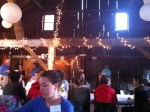
- Breakfast in the Barn
-

- Creating our own triple bottom line restaurants
-

- Burger Night at Bread and Butter Farm
-

- Ran out of lettuce? No problem!
-

- Live music and a kid’s parade during Burger Night
-

- Bread and Butter Farm’s Hoop House
-

- Bread and Butter Farm’s location
-
- In Hardwick, VT
-
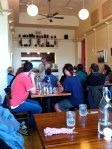
- Lunch at Claire’s in Hardwick (local foods restaurant)
-

- A business after my own heart (@ Claire’s)
-

- Visit to Highfields Compost Facility
-
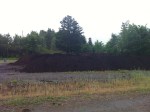
- Rows of warm beautiful compost
-
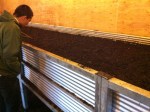
- Vermaculture Bins
-

- Inside High Mowing Seeds
-
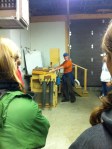
- Tom, owner of High Mowing, showing us the seed cleaner
-

- This is where they measure and pack the seed bags
-
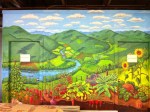
- Beautiful mural at High Mowing
-

- Germination Tests!
-

- Food Venture tour (helping people bring their value-added products into reality)
-

- Healing Garden at the Hospital
-
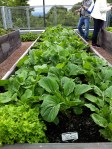
- More of the Healing Garden
-
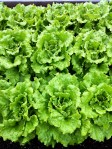
- This produce goes right to the hospital’s cafeteria
-

- Aquaponics system at the Sustainable School
-

- Sustainability is their name!
-

- Important things the elementary school is teaching their students
-
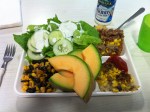
- Our fantastic scratch lunch (typical of what the kids get everyday)
-

- Conference tags
-

- Steve Ritz of the Green Bronx Machine giving us a private talk
-

- The end of the week culmination conference
-

- Pretty much the coolest crowd ever
-

- My program peers posing with members of the Green Bronx Machine
Dec2
This sums up the deepest fears and desires.
“Know, also, that farming is tough. Some days, maybe most days, you’ll feel overwhelmed. When your crop of onions is failing and your tomatoes have blight and the weed pressure on your winter squash is mounting and you can’t stand the people you work with (or, worse, the people you work with can’t stand you) and your livelihood depends on this food, you’ll feel overwhelmed and even afraid. But you’ll also feel a fullness. Your life will feel different from how it would if you were a young person living in a city, working in an office, going to bars and restaurants. You’ll know what quiet is and you’ll be able to go outside at night and see darkness. Your body, at first weak from the winter or the suburbs, will reject your work. Then, after struggling, it will embrace it. You’ll eat good food. Eventually, you’ll ask: “How do I live well?” And we need you to answer that question. We desperately need you to.”
– greenhorns
Dec1
Closing up November 2012
The days are getting shorter, but my semester is coming to a close soon (10 days left not that anyone is counting). I want to take a few minutes to reflect on and take record of the month.
The Celebrations
The first Om-Nom Acres event was a huge success! You can read the details over here.
I had a wonderful catch-up dinner with two friends and former coworkers of mine, Catherine and Riley. We ate great food from Seva in Ann Arbor, talked academics and politics, and laughed for a good portion of two hours.
There was the whole election business. Yay democracy!
My 26th Birthday rocked. I had a laid back day where I didn’t have to wake up early. I stood in line with stranger-friends for hours while waiting for my pastured turkey; the weather was warm and the smell of supporting local farms was in the air – beautiful! Devin and I raided the salad bar at the grocery store toppings and enjoyed delicious individual homemade pizzas with some of my dearest friends, Yolanda and Lisa. After dinner we decorated mini-cakes (and ate them) then snuggled in on the couch to watch two great films, the 8-time award winning “Waking Ned Divine” and the viral internet sensation “Dr. Horrible’s Sing-Along Blog.”
While I had some really amazing birthday presents (like Yolanda’s fantastic tea-spoon, Lisa’s nostalgic pie-bite treats from the Ann Arbor Farmer’s Market, and Sammit’s surprise-you-thought-I-had-to-work-a-24-hour-shift-on-your-birthday-but-really-I-swapped-with-a-fellow-employee-so-I-could-come-home-early-and-spend-the-night-with-you homecoming and complimentary extra thin-slicing food processor blade and edible arrangement) my absolute favorite was from my sister, Devin. She spent time contacting people I’ve worked with, gone to school with, and grown up with to solicit wonderful memories from them. She decorated these memories, put them in envelopes, and wrapped them in string with a plain brown tag. I opened 26 heart-warming memories, pictures, and letters from the people in my life. It was such a gift.
-

- My psychedelic cake
-

- Monica couldn’t sing to me this year.
-

- My collection of memories
I started my new internship this month and it has been a great experience already. I’m working in my and neighboring communities doing communications and organizing work for TimeBanking.
I spent a great afternoon with Devin and Sammit at our aunt and uncle’s house for a traditional Thanksgiving dinner. We had all the fixin’s and enjoyed my aunt’s legendary cheesecake while watching the dog show and the Detroit Lion’s lose (wouldn’t be Thanksgiving without it). My unit of three moved to my father and stepmother’s house for a second dinner in the evening. I blessed my mother for understanding a blended family and forgoing dinner at her house as well. On Saturday everyone trucked there way over to my house to enjoy yet another great Thanksgiving. Devin and I made almost everything the day before and cooked the rolls, turkey, and green bean/kale dish the day of – it was all pretty relaxed.
Our 2012 Menu:
- Brined and High-Temp Roasted Turkey (the previously mentioned one from the farm)
- Bacon & Caramelized Onion Mashed Potatoes
- Oven-Roasted Root Vegetables (squash, sweet potatoes, fingerling potatoes, parsnips, beets, carrots, onions, etc. – 400F for an hour)
- Rolls (I won’t share the recipe because I’m going to try for a better one)
- Pumpkin Pie with homemade crust
- Green Beans & Kale
- Wine, Water, Milk, & Sparkling Cider
-

- The Turkey (south end, leg removed)
-
- Green Beans & Kale
-

- My mom made me a centerpiece
-

- Pumpkin Pies (those are squirrels and a hedgehog)
-

- Scratch pull-apart rolls
-
- Beautiful Root Vegetables!
-

- Bacon/Onion Mashed Potatoes
The Sad-Faces
I’m dealing with some serious end-of-the-semester burnout. I’ve been trying to keep on the self-care wagon but I’m waning. 10 days.
When I sit down to read:

When I try to write papers:

When I try to compartmentalize:

When I try to take my mind of school by doing anything else:

Nov28
Hugelkultur
I was recently turned on to a permaculture technique called hugelkultur where logs and untreated wood are buried under the soil. As the wood decomposes is acts as a kind of slow-releasing sponge where it provides moisture and nutrients. Supposedly after a year or so a good hugelkultur mound will eliminate the need for most irrigation or additional watering. It is also supposed to deepen the flavors of the foods that are grown in those beds. It’s really exciting! I knew that keeping that huge pile of branches and debris from the storm this spring would eventually amount to something other than an eyesore. I’m going to give it a try and bury the sticks in our raised beds below the compost.
A great tip if you live in an area that won’t allow you to have a traditional raised hugelkultur bed is to put the logs in a trench and cover with soil so that it ends up being ground level.
Check out the video below and I’ll make sure to let you know how it turned out in the spring!
 Om-Nom Acres